The grower has the option to obtain pre-mixed fertilizers that are already mixed in the right ratio for a specific crop or to use basic fertilizers and to mix them into various tanks and ad them to the fertigation system. The first option is the easiest but slightly more expensive and recommended for inexperienced growers. [...]
The amount of nutrients in a solution is expressed as a concentration. For instance; if 1 g of potassium sulphate is added to 1,000 L of water, one could express the amount of potassium sulphate in relation to the amount of water as 1 g.1000 L-1 potassium sulphate solution (it can also be expressed as [...]
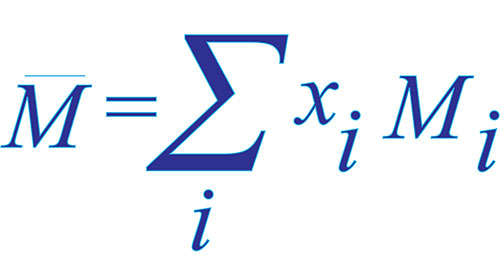
The atomic weight or molecular weight is the relative weight of each atom compared to other atoms. The base element to which all other elements are measured is oxygen and it is given the value of 16.00. The atomic or molecular weights of the most important elements used in hydroponics are provided below. The values [...]
First it is important to understand which nutrients are included in the various fertilizers and in what amounts. It is important to distinguish between macro and micro elements. The macro elements are taken up in large quantities and the micro elements in smaller quantities. Although the micro elements are taken up by smaller amounts, it [...]
NITROGEN Toxicity Symptoms Plants are dark green in colour with excessive amount of foliage Root growth is restricted Reduced flowering and seed production Plants wilt quickly under water stress situations Susceptible to diseases. Deficiency Symptoms Plants are light green in colour starting at the bottom leaves Restricted growth Leaves are smaller than normal Purple discolouration [...]
Plants consist of 80-95 % of water, depending on specie, less than 15-20 % percent consists of carbon (C), oxygen (O) and hydrogen (H). The remaining 1.5 % is made up of the macro and microelements. This small portion will be our focus. All plants require macro- and microelements in specific ratios in order to grow properly. The soil [...]
Water pH is a mathematical term to denote degrees of acidity or alkalinity and is expressed by a series of positive numbers between 0 and 14 with 7 being neutral. Zero being very acidic and 14 highly alkaline. Water pH can be measured by a hand held pH meter operated by a small battery. The [...]
Salt content is one of the most important factors that should be evaluated before designing a hydroponic production system. It has been found that yields can decreased by 35% using low quality water, or water with high salt content. You will see that if there are elements in the water exceeding normal levels, yields will [...]
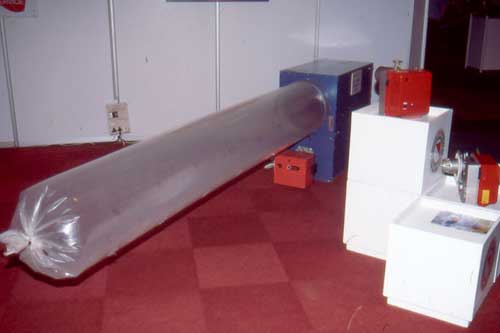
Greenhouse heating can be very expensive, especially if you greenhouse is not optimally set up for heating. There are factors that can be taken into account in order to reduce greenhouse heating cost or capital installation cost. (A lot more info is in The Polytunnel Book) Reduce air leakages It is estimated that 10-30% of heat in [...]
