About Antonius Lecuona

I studied agriculture at the University of Stellenbosch in South Africa in 1984 and completing my M.Sc Agric. in 1998. . My love for "Controlled Environmental Agriculture" (CEA), started in my third year when I was exposed to the Welgevallen Research Station. There Prof. P.C.Maree showed us what hydroponics consisted of. It was awesome. There were no large tractors involved, no dusty fields, no uncontrollable storms to destroy your crop (well that is what I thought). Since then I put hydroponics to much better use, not just farming. We solved pollution problems by cleaning mines effluent with hydroponics and aquaculture. They were used to remove toxic metals to produce clean water (which we sold and make more money of than the produce). What I learned from 1987 I tried to compile in this website and I hope it is from some value to the serious commercial farmer that wants to take the journey into Commercial Hydroponic Farming.

What is the difference between LDPE and HDPE Irrigation pipes

2024-12-22T16:20:45+02:00By |Closed systems, Open systems, Systems|

LDPE HDPE Difference is crucial when designing a good system.  You can either save a lot of money initially and waste a lot later when your irrigation system starts popping. The irrigation pipes ensure that water is supplied to the plants. The most common used pipes are the LDPE types. [...]

Which hydroponic irrigation pumps should be used

2024-12-22T16:58:53+02:00By |Closed systems, Open systems, Systems|

Hydroponic pumps are at the heart of your irrigation system. Many people tend to neglect this area just because they do not understand what is involved in selecting the right hydroponic pump and the requirements for pumps used in hydroponic conditions. It must be emphasized that the pumps used in [...]

What is the optimum gravel depth for hydroponic channels

2013-07-31T13:21:19+02:00By |Closed systems, Systems|

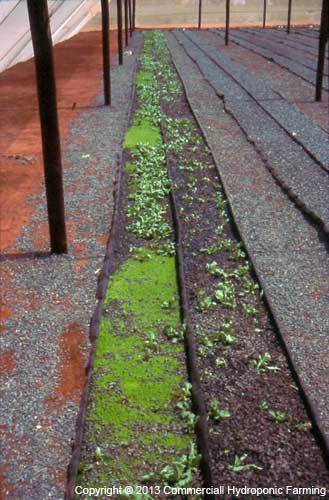
The correct gravel depth is important for the development of the roots system. Too shallow gravel will not only restrict root development and volume, but will also cause the development of algae on the surface of the gravel. The algae attract fungus gnats which feed on the roots of plants. [...]

Manage the root temperature in growth bags for optimal growth

2024-12-22T16:39:13+02:00By |Open systems, Systems|

Root temperature does play an essential part in plant growth. It influences plant dry-mass, uptake of nitrogen, phosphorus and potassium. Root zone temperatures between 18–22°C lose less nitrate and phosphate through emissionsMiguel Urrestarazu, María del Carmen Salas, Diego Valera, Adrián Gómez & Pilar Carolina Mazuela (2008) Effects of Heating Nutrient [...]

How to mix fertilizers in a nutrient tank

2024-12-22T17:08:29+02:00By |Closed systems, Open systems, Systems|

The following procedure should be followed when mixing fertilizers in nutrient tanks: Fill the tank with water Check if the pH is between 5.5 and 6.8 Increase or decrease the pH if necessary with either an acid or base Start stirring the water in the tank. The water in the [...]

Go to Top