Skip to content
  • General
  • Systems
    • Greenhouses
      • Ventilation
      • Cooling
    • Open systems
    • Closed systems
  • Nutrients
    • Fertilizers
    • Macro nutrients
    • Micro nutrients
    • pH
    • Salt content
  • Crops
    • Seedlings
    • Tomatoes
    • Sweet peppers
    • Cucumbers
    • Green beans
    • Lettuce
    • Spinach
  • Crop protection
    • Diseases
    • Pests
    • Physiological disorders
  • Article list
  • About
    • Privacy Policy
    • Terms of use
  • 11 Tips on how to work safely with chemicals

    By Antonius Lecuona|Published On: May 27, 2013|Last Updated: February 15, 2014|Categories: Fertilizers, Nutrients|Tags: Fertilizers|

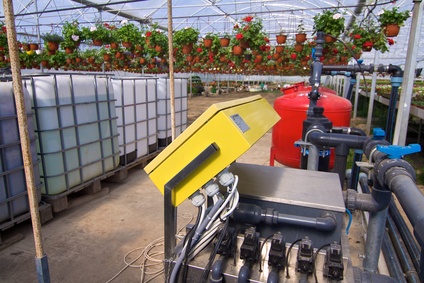
    Great care should be taken when working with chemicals. It is important to adhere to the following guidelines, which can be applied to all types of chemicals: Always keep the same type of chemical together. Always close the containers properly. Never leave any container open so that the gasses can escape. Place a brick or [...]
    Read more …
  • fertigation nutrient seedling nursery hydroponic

    Is your closed hydroponic farm correctly designed for stock solutions

    By Antonius Lecuona|Published On: May 19, 2013|Last Updated: July 19, 2014|Categories: Closed systems, Fertilizers, Nutrients, Systems|Tags: closed systems, Fertilizers, Stock solutions, Tanks|

    Most automated systems installed in closed hydroponic systems use injectors rather than proportioners. A simplified diagram of where to install such a system is provided below. Many advanced injectors such as the Priva® and Volmatic® systems use much more complex configurations. Most of the systems use two pH probes and two EC probes in case [...]

    Read more …
  • Here is a quick way to make nutrient stock solutions for hydroponic systems

    By Antonius Lecuona|Published On: May 19, 2013|Last Updated: February 15, 2014|Categories: Fertilizers, Nutrients|Tags: Fertilizers, Stock solutions|

    To make a nutrient stock solution, you need a minimum of two tanks. Nutrient Stock solutions cannot be made in one tank. The reason is that above a certain concentration, calcium reacts with sulphates and phosphates to form insoluble calcium sulphate ([latex]\ce{CaSO4}[/latex]) and calcium phosphate ([latex]\ce{Ca3(PO4)2}[/latex]). The two nutrient tanks will be called Tank A and [...]

    Read more …
  • Fertilizer solubility is the key to the best nutrient stock solutions

    By Antonius Lecuona|Published On: May 19, 2013|Last Updated: February 15, 2014|Categories: Fertilizers, Nutrients|Tags: Fertilizers|

    Fertilizer solubility is one of the key elements in making hydroponic nutrient stock solutions.  If you know the fertilizer solubility, you can make optimum stock solutions for any size nutrient tank. Making stock solutions is extremely simple. All you have to do is to calculate the amount of fertilizers required to make a normal 1:1 [...]

    Read more …
  • Formulating a hydroponic nutrient solution – Part II: Micro nutrients

    By Antonius Lecuona|Published On: May 19, 2013|Last Updated: February 15, 2014|Categories: Fertilizers, Nutrients|Tags: Fertilizers, Micro-elements|

    Micro nutrients are just as important as macro nutrients. Many growers fail to have their water analysed for all elements, and in some area one might have enough of a micro element in the water. By adding more with fertilizers, toxicity levels may be reached which can reduce yields significantly. The following example will use [...]

    Read more …
  • How to adjust for fertilizer impurities in hydroponic nutrient formulations

    By Antonius Lecuona|Published On: May 19, 2013|Last Updated: February 15, 2014|Categories: Fertilizers, Nutrients|Tags: Fertilizers|

    Not all fertilizers are pure. Some have impurities, such as clay, silt and sand particles, also called “carriers”, that do not provide any nutrients to the plant. After calculating the amount of fertilizers that needs to be added to a nutrient tank, the weight of the impurities should be taken into account and subtracted from [...]

    Read more …
  • How to adjust for specific gravity of liquid fertilizer

    By Antonius Lecuona|Published On: May 19, 2013|Last Updated: February 15, 2014|Categories: Fertilizers, Nutrients|Tags: Fertilizers|

    Liquid fertilizers are treated slightly different than granular fertilizers. They do not have impurities, but their density or specific gravity need to be taken into account. In most calculations, it is assumed that fertilizers are granular, so we use the weight of the fertilizers. If it is a liquid, we would have used volumes such [...]

    Read more …
  • Formulating a hydroponic nutrient solution – Part I: Macro Nutrients

    By Antonius Lecuona|Published On: May 18, 2013|Last Updated: January 5, 2019|Categories: Fertilizers, Nutrients|Tags: Fertilizers, Nutrients|

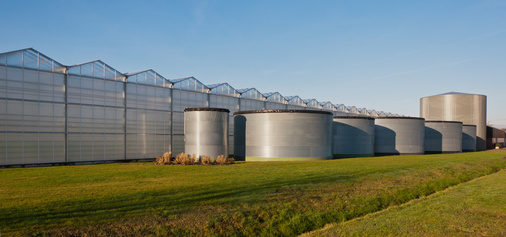
    Formulating one’s own nutrient solution should be left to advanced growers. Any mistake could lead to the loss of the whole crop, unless the mistake can be identified early, in which case the nutrient solution in the tank is lost. The hypothetical example will be used to show how to calculate the amount of [...]
    Read more …
  • greenhouse nutrient tanks fertigation hydroponics multispan agricutlure farming

    Why is stock solutions such a popular method in open hydroponic systems

    By Antonius Lecuona|Published On: May 15, 2013|Last Updated: July 19, 2014|Categories: Fertilizers, Nutrients|Tags: Fertilizers, Tanks|

    Stock solutions are essential component of any hydroponic farm.  Imagine a system, 5,000 m² in size growing tomatoes. The estimated number of plants would be 15,000. On average tomato plants consume 1.5 – 2 L of water per day. The system would require at least 30,000 L water per day. If a grower has one [...]

    Read more …
Previous121314Next
Copyright © 2013 - 2024 | Commercial Hydroponic Farming
FacebookX
Page load link
We use cookies to ensure that we give you the best experience on our website. If you continue to use this site we will assume that you are happy with it. Please read our Privacy Policy. We will remind you again in a months time.
Go to Top