Skip to content
  • General
  • Systems
    • Greenhouses
      • Ventilation
      • Cooling
    • Open systems
    • Closed systems
  • Nutrients
    • Fertilizers
    • Macro nutrients
    • Micro nutrients
    • pH
    • Salt content
  • Crops
    • Seedlings
    • Tomatoes
    • Sweet peppers
    • Cucumbers
    • Green beans
    • Lettuce
    • Spinach
  • Crop protection
    • Diseases
    • Pests
    • Physiological disorders
  • Article list
  • About
    • Privacy Policy
    • Terms of use
  • bacterial speck spot tomatoes

    Bacterial speck

    By Antonius Lecuona|Published On: August 27, 2013|Last Updated: August 31, 2013|Categories: Diseases|

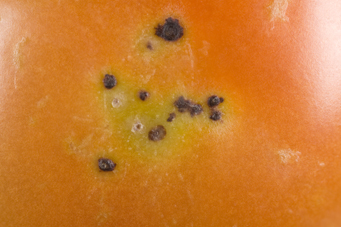
    Bacterial speck, also known as Xanthomonas campestris pv. vesicatoria, Pseudomonas syringae pv. Tomato. Bacterial speck and spot are very difficult to distinguish from each other. However the control strategies are the same and both diseases attack the above ground organs of the plant. Bacterial speck symptoms Small water soaked lesions which develop during periods of rain, [...]

    Read more …
  • Cucumber pest and disease control

    By Antonius Lecuona|Published On: August 27, 2013|Last Updated: August 30, 2013|Categories: Cucumbers, Diseases, Pests|

    Never use chemical that are not registered by your local Department of Agriculture. A range of chemicals that can be used on cucumbers are provided below and must be followed to control most insects and diseases found in hydroponic production systems (in South Africa). Please check your local Agricultural extension officer for a list of [...]
    Read more …
  • growth cracks radial tomatoes greenhouse

    Growth cracks in greenhouse vegetable fruit

    By Antonius Lecuona|Published On: August 25, 2013|Last Updated: December 1, 2013|Categories: Physiological disorders|Tags: Physiological disorders|

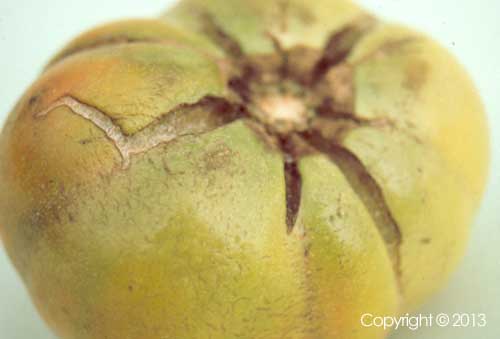
    Growth cracks symptoms There are two types of cracking found on tomato fruit. Concentric cracking are cracks that vary in depth and size found in circles around the stem and radial cracking which are cracks running from the stem to the blossom end of the fruit. Concentric growth cracks on tomatoes Cause of [...]

    Read more …
  • cat-face tomato fruit greenhouse catface

    Cat-face tomato fruit – genetic physiological disorder

    By Antonius Lecuona|Published On: August 25, 2013|Last Updated: August 26, 2013|Categories: Physiological disorders|

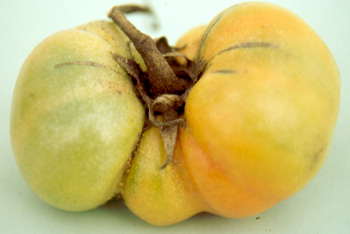
    Cat-face tomato fruit Symptoms Fruits have a long scar at the blossom end that extends inwards and renders the fruit unmarketable and disfigured (abnormal). There are bands of scar tissue between swellings and cavities that extend deep into the fruit body. Most of these cat-face fruit ripen unevenly. Due to the scar tissue, cat-face fruit cannot [...]

    Read more …
  • Hollow fruit disorder in hydroponic greenhouse systems

    By Antonius Lecuona|Published On: August 25, 2013|Last Updated: August 28, 2013|Categories: Physiological disorders|Tags: Physiological disorders|

    Hollow fruit description Hollow fruit, also called puffy fruit or boxy fruit are angular in shape instead of round, however one should be careful since some tomato fruit are genetically more hollow or angular than other. The first signs inside the fruit are the lack of “gel” surrounding the seed, leaving a gap between the placental [...]

    Read more …
  • Zippering – Physiological disorder of tomato and pepper fruit

    By Antonius Lecuona|Published On: August 4, 2013|Last Updated: August 4, 2013|Categories: Crops, Physiological disorders|Tags: Physiological disorders|

    Severe zippering with secondary scarring of the tomato skin. Zippering symptoms Zippering are thin scars running from the top of the shoulder of the fruit down the length to the blossom end. These longitudinal scars have small transverse scars along it, which resemble a “zip” (thus the name). More than one of these [...]

    Read more …
  • Blossom drop – A sure sign of stress in hydroponic greenhouses

    By Antonius Lecuona|Published On: August 3, 2013|Last Updated: August 3, 2013|Categories: Crops, Physiological disorders|Tags: Physiological disorders|

    Blossom drop Symptoms Blossom drop (flower buds abscise) occurs prior to anthesis under stress conditions. The early indications of blossom drop are the yellowing of the swollen area which joins the flower to its stem. After the flower has fallen or abscised, a small dried out stub is left over. Which is quite disheartening since there [...]
    Read more …
  • blossom-end-rot-hydroponic-vegetable-fruit

    Blossom-end-rot – most common physiological disorder in vegetable fruit

    By Antonius Lecuona|Published On: August 3, 2013|Last Updated: January 13, 2019|Categories: Physiological disorders|Tags: BER|

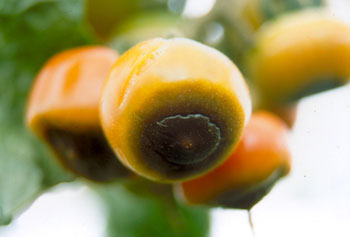
    Blossom-end-rot (BER) Symptoms This physiological disorder looks like a typical fruit disease. The symptoms generally occur at the blossom-end of the fruit and begins with a light tan, water soaked lesions, which when enlarged, turn black and leathery. As in tomatoes and watermelons, blossom-end-rot usually appears when the fruit is about half-grown The affected areas first [...]

    Read more …
  • sunscald tomatoes greenhouse

    Sunscald or sun burn on vegetable fruit – sun damage that can be prevented

    By Antonius Lecuona|Published On: August 3, 2013|Last Updated: August 30, 2013|Categories: Physiological disorders|Tags: Physiological disorders|

    Sunscald or sunburn causes Sunscald may appear on foliage and fruits. The disorder is caused when the temperature of the fruit exceeds 40°C. An imbalance of various chemicals takes place which causes the destruction of the tissue. Heat injury expresses itself through a narrowing of the base of the stem, at the soil line. However, with [...]

    Read more …
Previous456Next
Copyright © 2013 - 2024 | Commercial Hydroponic Farming
FacebookX
Page load link

This Website Is Available for Purchase

After many great years, this website is now available for sale.
If you’re interested in acquiring the site, brand, and its assets, we’d love to hear from you.

Please contact us for more information or to discuss the opportunity at

info@commercial-hydroponic-farming.com

We use cookies to ensure that we give you the best experience on our website. If you continue to use this site we will assume that you are happy with it. Please read our Privacy Policy. We will remind you again in a months time.
Go to Top