Micro nutrients are just as important as macro nutrients. Many growers fail to have their water analysed for all elements, and in some area one might have enough of a micro element in the water. By adding more with fertilizers, toxicity levels may be reached which can reduce yields significantly. The following example will use [...]
Not all fertilizers are pure. Some have impurities, such as clay, silt and sand particles, also called “carriers”, that do not provide any nutrients to the plant. After calculating the amount of fertilizers that needs to be added to a nutrient tank, the weight of the impurities should be taken into account and subtracted from [...]
Liquid fertilizers are treated slightly different than granular fertilizers. They do not have impurities, but their density or specific gravity need to be taken into account. In most calculations, it is assumed that fertilizers are granular, so we use the weight of the fertilizers. If it is a liquid, we would have used volumes such [...]
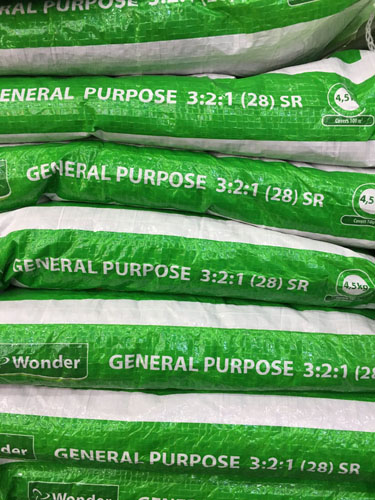
Formulating one’s own nutrient solution should be left to advanced growers. Any mistake could lead to the loss of the whole crop, unless the mistake can be identified early, in which case the nutrient solution in the tank is lost. The hypothetical example will be used to show how to calculate the amount of [...]
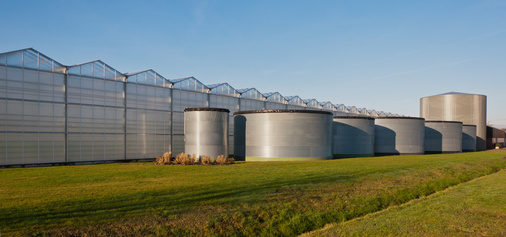
Stock solutions are essential component of any hydroponic farm. Imagine a system, 5,000 m² in size growing tomatoes. The estimated number of plants would be 15,000. On average tomato plants consume 1.5 – 2 L of water per day. The system would require at least 30,000 L water per day. If a grower has one [...]
The grower has the option to obtain pre-mixed fertilizers that are already mixed in the right ratio for a specific crop or to use basic fertilizers and to mix them into various tanks and ad them to the fertigation system. The first option is the easiest but slightly more expensive and recommended for inexperienced growers. [...]
The amount of nutrients in a solution is expressed as a concentration. For instance; if 1 g of potassium sulphate is added to 1,000 L of water, one could express the amount of potassium sulphate in relation to the amount of water as 1 g.1000 L-1 potassium sulphate solution (it can also be expressed as [...]
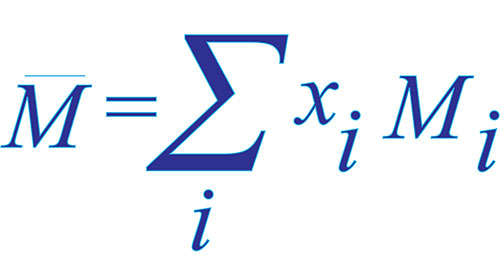
The atomic weight or molecular weight is the relative weight of each atom compared to other atoms. The base element to which all other elements are measured is oxygen and it is given the value of 16.00. The atomic or molecular weights of the most important elements used in hydroponics are provided below. The values [...]
Plants consist of 80-95 % of water, depending on specie, less than 15-20 % percent consists of carbon (C), oxygen (O) and hydrogen (H). The remaining 1.5 % is made up of the macro and microelements. This small portion will be our focus. All plants require macro- and microelements in specific ratios in order to grow properly. The soil [...]
