
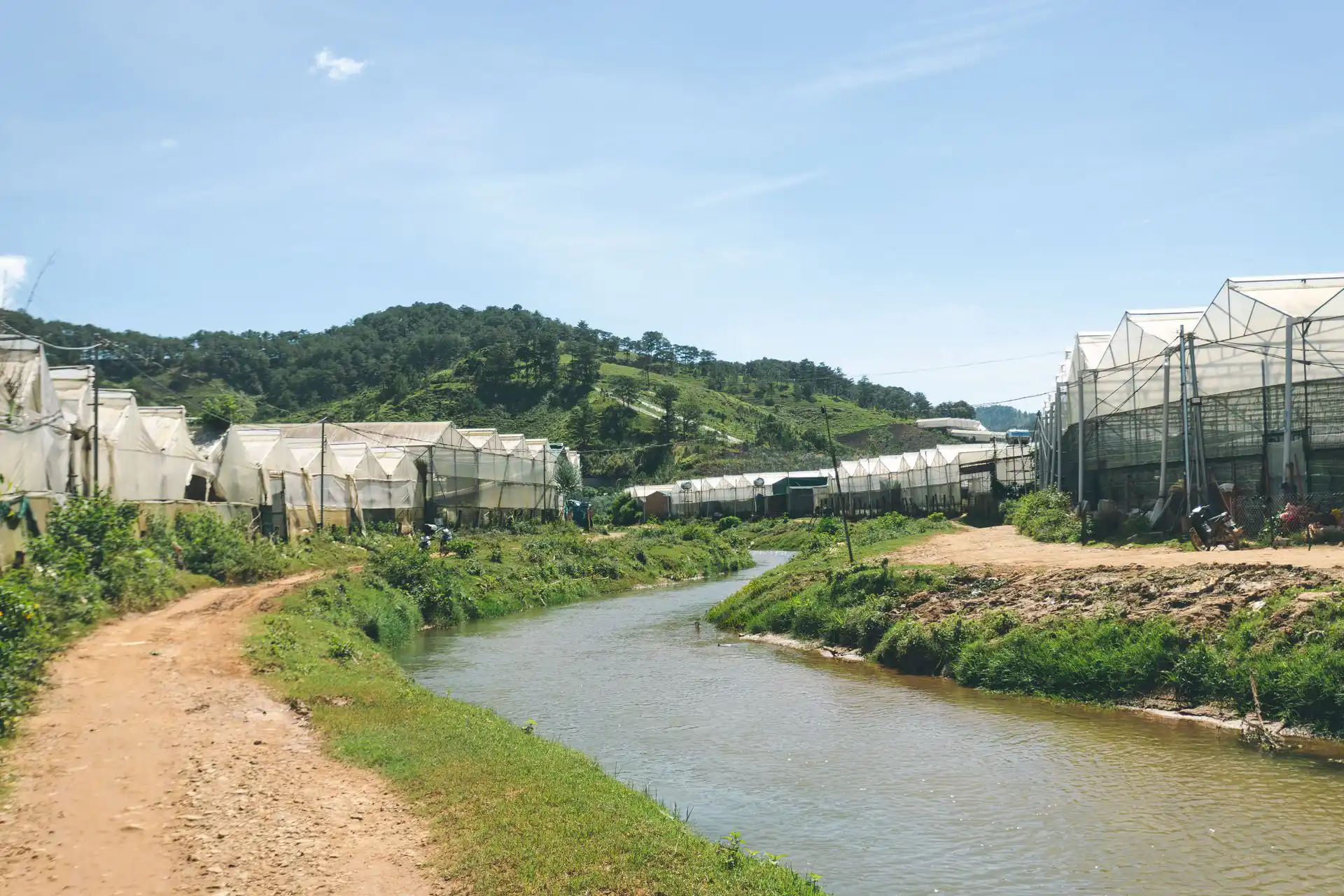
What affects water quality in hydroponics?
The main factors affecting water quality in hydroponics are chemical, biological, and physical/environmental conditions. Maintaining optimal water quality is essential because the water serves as the sole carrier for nutrients and oxygen to the plant roots(‘Understanding Water Quality, Water EC, and pH’ 2016; Orsini et al. 2017; van Os et al.). It is also the carrier of everything you don’t want to affect the plants. Without understanding what affects water quality, a grower cannot know what corrections in fertilization must be made when things go wrong.
Chemical factors affecting hydroponic water quality.
The chemical composition of the nutrient solution directly determines plant health and productivity. EC measures the total concentration of dissolved salts and minerals in the water(Orsini et al. 2017; Araya et al.; van Os et al.). It is used to estimate nutrient levels; however, it does not distinguish between beneficial nutrients and harmful ballast ions(van Os et al.). High EC levels can cause salinity stress,(Dorai et al. 2001) leading to osmotic imbalances and reduced yields, while low EC results in obvious nutrient deficiencies, fruit cracking and blossom end rot(Max & Horst 2009).
The pH (acidity or alkalinity) of the solution is arguably the most critical factor because it controls nutrient availability. The ideal range for most crops is between 5.5 and 6.5. If the pH is too high (>6.5), elements like iron, manganese, and phosphorus become less soluble; if too low (<5.0), trace elements can become toxic.
Alkalinity refers to the water’s buffering capacity, or its ability to neutralize acids, which is primarily influenced by bicarbonates and carbonates. High alkalinity makes it difficult to adjust and stabilize the pH. Hardness measures the concentration of calcium and magnesium; if these levels are too high, they can interfere with the uptake of other nutrients or cause precipitates in the plumbing pipes and nozzles(Gunes et al. 1998).
Elements such as sodium (Na), chloride (Cl), and boron (B) can be harmful, especially in closed (recirculating) systems where they accumulate over time because plants take them up in very small quantities Sodium, for instance, can interfere with the uptake of calcium and magnesium, causing disorders like blossom-end rot(Kinoshita & Masuda 2011).
Biological factors
Microbial and plant-like organisms can rapidly degrade water quality especially in closed hydroponic systems.
Closed hydroponic systems are highly susceptible to the spread of root-infesting pathogens like Pythium, Phytophthora, and Fusarium(Gull et al. 2005). These organisms produce zoospores that float in the nutrient solution and infect plant roots.All three pathogens are a growers nightmare to control and heavy infections require drastic measures to clean the whole system thoroughly.
There is always some algae in and around a hydroponic farm. Algae is not always such a bad thing, it just depends on how much and where it is growing. Algae will grow wherever they can find nutrients, some heat and light. They compete with crops for nutrients and oxygen(Huo et al. 2020), and their decomposition can lead to reduced oxygen in the nutrient solution. Severe algae growth will clog pumps, drippers, and filters(Hendrickson & Dunn 2021).
While the nutrient solution is not sterile and often contains beneficial microorganisms, it can also harbor harmful bacteria like E. coli and Salmonella if the facility is not kept clean(Duran & Artemis 2024).
Physical and environmental factors
External conditions significantly influence the chemical and biological state of the water.
Roots require oxygen for respiration. Lack of oxygenation can lead to fermentation in the nutrient solution and root rot(Mustroph & Albrecht 2003). Oxygen solubility is highly dependent on temperature; as water temperature increases, the amount of oxygen it can hold decreases.
Temperature affects the rate of chemical reactions and nutrient uptake. High temperatures increase the transfer of root diseases, while excessively low temperatures can inhibit the uptake of nutrients like phosphorus and iron(Nxawe 2011).
The initial quality of the water source (tap, rain, well, or surface water) sets the baseline for impurities(RATTINK 1977). Tap water often contains chlorine or chloramines used for disinfection, which can stress roots and inhibit beneficial bacteria 49, 50. Rainwater is generally soft and low in minerals but may contain plant pathogens if collected from contaminated surfaces(Valentin 2026). Reverse Osmosis (RO) is often used to provide a “blank slate” by removing nearly all dissolved solids, but is not economically viable for commercial hydroponic farming.
References.
- Araya, E.N., Maleka, M., Pule, T., Sithole, M., Masilela, L., Araya, H., Amoo, S., Truter, M. & Plooy, C.D. M Maleka, T Pule, MG Moremi, MA Sithole, LN Masilela, M Mutema, HT Araya, Somamoo, M Truter & CP Du Plooy.
- Dorai, M., Papadopoulos, A.P. & Gosselin, A. (2001). Influence of electric conductivity management on greenhouse tomato yield and fruit quality. Agronomie, 21, 367–383.
- Duran, A. & Artemis, L. (2024). Surveillance of E. coli O157:H7 and Salmonella Typhimurium in Hydroponic Systems with Nutrient Solutions of Different Electrical Conductivities.
- Gull, C., Labuschagne, N. & Botha, W.J. (2005). Pythium species associated with wilt and root rot of hydroponically grown crops in South Africa. African Plant Protection, 10.
- Gunes, A., Alpaslan, M. & Inal, A. (1998). Critical nutrient concentrations and antagonistic and synergistic relationships among the nutrients of NFT‐grown young tomato plants. Journal of Plant Nutrition, 21, 2035–2047.
- Hendrickson, T. & Dunn, B. (2021). Algae Control for Greenhouse Production.
- Huo, S., Liu, J., Addy, M., Chen, P., Necas, D., Cheng, P., Li, K., Chai, H., Liu, Y. & Ruan, R. (2020). The influence of microalgae on vegetable production and nutrient removal in greenhouse hydroponics. Journal of Cleaner Production, 243, 118563.
- Kinoshita, T. & Masuda, M. (2011). Differential Nutrient Uptake and Its Transport in Tomato Plants on Different Fertilizer Regimens. HortScience, 46, 1170–1175.
- Max, J.F.J. & Horst, W.J. (2009). Influence of nighttime electrical conductivity of substrate solution on fruit cracking and blossom-end rot of greenhouse tomato in the tropics. Journal of Plant Nutrition and Soil Science, 172, 829–838.
- Mustroph, A. & Albrecht, G. (2003). Tolerance of crop plants to oxygen deficiency stress: fermentative activity and photosynthetic capacity of entire seedlings under hypoxia and anoxia. Physiologia Plantarum, 117, 508–520.
- Nxawe, S. (2011). Effects of Regulating Hydroponic, Solution Temperature on Plant Growth, Accumulation of Nutrients and Other Metabolites. Cape Peninsula University of Technology.
- Orsini, F., Dubbeling, M., De Zeeuw, H. & Gianquinto, G. (eds). (2017). Rooftop Urban Agriculture. Cham: Springer International Publishing.
- van Os, E., Blok, C., Voogt, W. & Waked, L. Water quality and salinity aspects in hydroponic cultivation.
- RATTINK, H. (1977). Spread of Fusarium spp. by means of water. Acta Horticulturae, 71, 103–105.
- Understanding Water Quality, Water EC, and pH. (2016). Understanding Water Quality, Water EC, and pH.
- Valentin, D. (2026). Reverse Osmosis vs Tap vs Rainwater: Hydroponic Water Guide. Reverse Osmosis vs Tap vs Rainwater: Hydroponic Water Guide.
Cover Photo by Tường Chopper.
Related Posts


Share This Story, Choose Your Platform!


What affects water quality in hydroponics?
The main factors affecting water quality in hydroponics are chemical, biological, and physical/environmental conditions. Maintaining optimal water quality is essential [...]

Why Water Quality Matters More Than You Think in Hydroponics
What is the ideal water quality for hydroponics. The answer is going to be very fluffy but one thing is [...]