About Antonius Lecuona

I studied agriculture at the University of Stellenbosch in South Africa in 1984 and completing my M.Sc Agric. in 1998. . My love for "Controlled Environmental Agriculture" (CEA), started in my third year when I was exposed to the Welgevallen Research Station. There Prof. P.C.Maree showed us what hydroponics consisted of. It was awesome. There were no large tractors involved, no dusty fields, no uncontrollable storms to destroy your crop (well that is what I thought). Since then I put hydroponics to much better use, not just farming. We solved pollution problems by cleaning mines effluent with hydroponics and aquaculture. They were used to remove toxic metals to produce clean water (which we sold and make more money of than the produce). What I learned from 1987 I tried to compile in this website and I hope it is from some value to the serious commercial farmer that wants to take the journey into Commercial Hydroponic Farming.

Tomato russet mite

2014-10-31T17:11:05+02:00By |Pests|

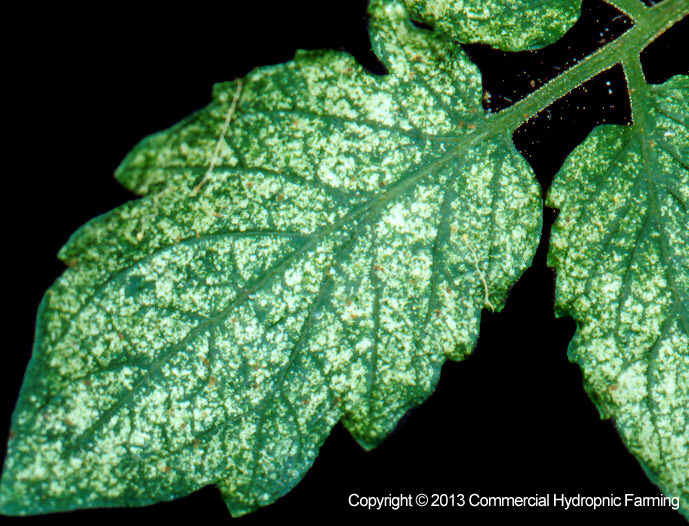
Description Russet mites (Aculops lycopersici, Aculus lycopersici) are so small that a 14X hand lens is needed to see them. Because of their size, these mites are rarely noticed until plants are damaged. At this time, there may be hundreds of yellowish, conical-shaped mites on the green leaves immediately above [...]

Plusia looper

2014-10-31T17:11:20+02:00By |Pests|

Plusia looper description Plusia looper, also known as Cabbage looper or more correctly Trichoplusia ni are light green caterpillars with white or pale yellow stripes along the sides. It typically moves by arching the middle part of its body upward. The adult moth is active at night (about 1 ½ [...]

American Bollworm

2014-10-31T17:11:39+02:00By |Pests|

Bollworm description Bollworm, also known as tomato fruit worm or American Bollworm, Helicoverpa armigera, are small caterpillars (about 30mm long, slightly more than 1 inch) that have prominent rows of dark bumps on their backs. Mature worm's colour varies from dark grey to light brown and have lengthwise stripes on [...]

Pruning cucumbers in greenhouses

2019-01-07T17:54:42+02:00By |Cucumbers|

Selecting a cucumber pruning system The question arises which system should be used. Each system has its advantages and disadvantages according to the ability and managerial skill of the grower, the experience of his labour, capital available to build the various structures, climatic conditions of the area etc. The easiest [...]

Sweet potato whitefly

2014-02-15T12:39:48+02:00By |Pests|

Sweet potato whitefly description Sweet potato whitefly (Bemisia tabaci, order Hemiptera and family Aleyrodidae) is a sap feeder. The adults are about 4-5mm long with a pale yellow body. The sweet potato whitefly can easily be identified by their red compound eyes.  When feeding their wings are slightly apart creating [...]

Green bean fertigation – a delicate matter

2026-07-19T16:49:43+02:00By |Green beans|

Green bean fertigation must be controlled carefully since they are extremely fast growing. There are pro's and con's of fast growing crops.  An advantage can be that any deficiency or toxicity can be outgrown quickly.  The disadvantage is that the crop can develop one of these physiological disorders very quickly. [...]

Go to Top